The Clues Were There All Along

In this article


I was reading Agatha Christie’s “The Disappearance of Mr. Davenheim” when Hercule Poirot stopped me. Not literally, of course. But I reached a passage and stopped reading.

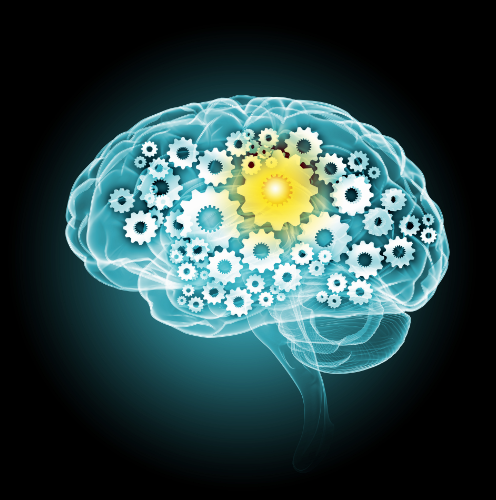
“It is the brain, the little grey cells… on which one must rely. The senses mislead. One must seek the truth within—not without.”

I read it again. The little grey cells. I closed—or perhaps lowered—the book and sat with that phrase for a moment.

Poirot was talking about solving a mystery.

I was thinking about hippocampal brain slices.

Years ago, during my biomedical sales days, I spent a great deal of time in research laboratories. They were fascinating places. Patch clamps. Oscilloscopes. Ion channels. Living cells revealing tiny electrical events most of us would never imagine were happening.

I wasn’t the scientist conducting those experiments. I was a pharmacist who had wandered into their world through biomedical sales, and I was endlessly curious about what they were doing. One day, that curiosity gave me a glimpse of something I already knew. Or thought I knew.

I was visiting a researcher who was studying cardiomyocytes—living heart muscle cells. His work involved measuring the electrical activity that allows those cells to do what heart cells have been doing faithfully since before any of us took our first breath. He knew I was a pharmacist.

“Brad, do you want to see diltiazem work?”

Of course I did.

Diltiazem is a calcium-channel blocker, a medication used for conditions such as high blood pressure and certain heart rhythm problems. I knew its pharmacology. I knew what blocking calcium channels did to cardiac cells. I had learned it in school, talked about it with physicians, and explained it to patients.

The researcher added diltiazem to the cardiomyocytes, and I watched the oscilloscope. The electrical activity changed.

There it was. Not a diagram in a pharmacology textbook. Not an explanation of a mechanism of action. Not something I had memorized for an examination years before. I was watching a drug affect a living heart cell.

I knew what diltiazem did. But now I had seen it. There is a difference.

I think that is why Poirot’s little grey cells stopped me all these years later. We spend much of our lives collecting information. We read books. We attend classes. We listen to experts. We learn our professions. Eventually, some things become so familiar that we stop wondering about them.

But every so often, something interrupts us. A researcher asks a question. An oscilloscope flickers. A sentence in an old mystery story makes us put the book down. And suddenly something we thought we understood asks to be looked at again.

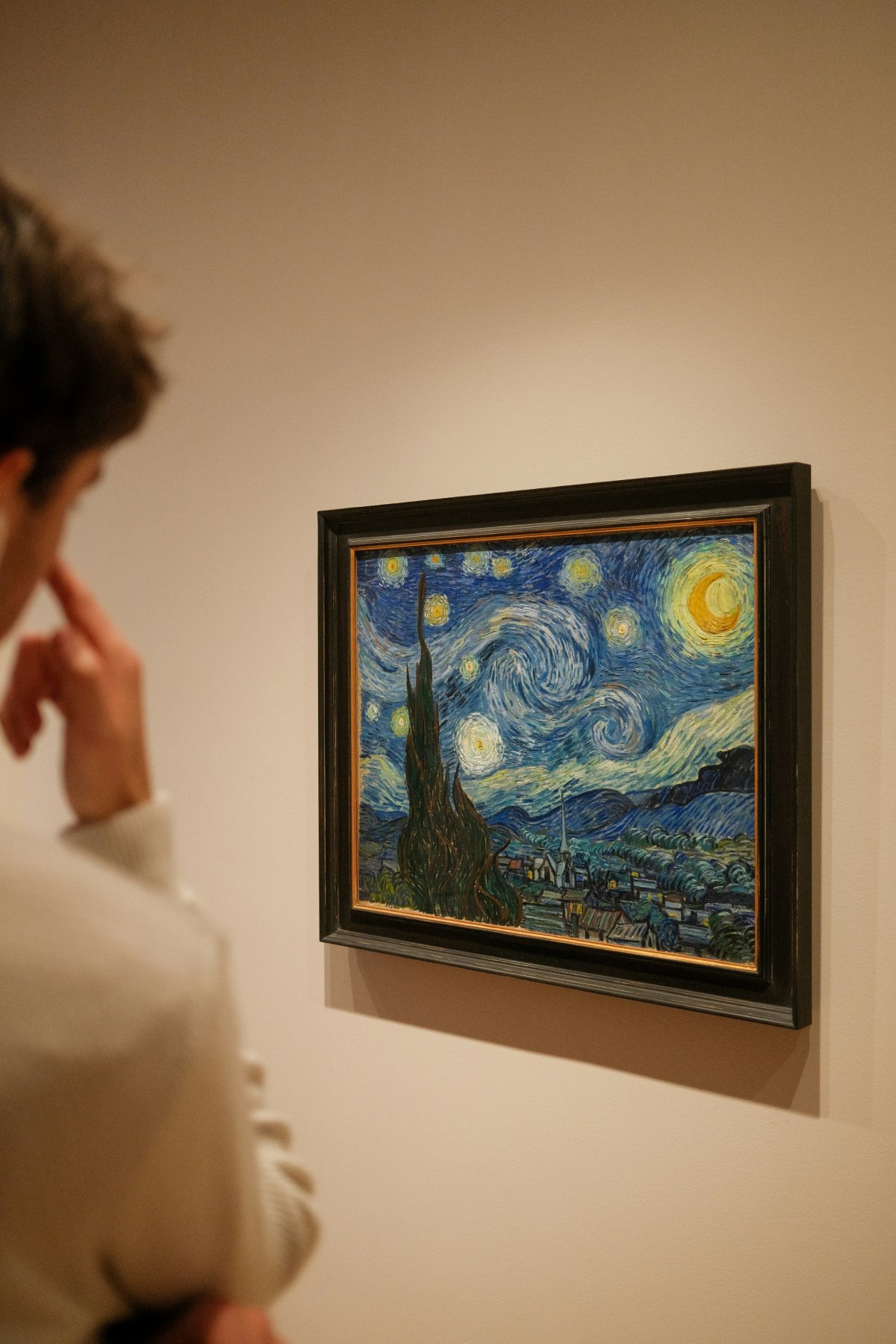
Perhaps that is what observation really is. Not merely seeing what is in front of us, but being curious enough to stop when something catches our attention—and then wondering why.

Poirot solved mysteries that way. Scientists make discoveries that way. Writers sometimes find essays that way.

The clues were there all along.

Share Article

Picture of Brad G. Philbrick
Brad G. Philbrick

A grant proposal writer of biotechnology and healthcare

Search Our Site

In this article

Related Articles

Pills to Prose

Of all the prescriptions I filled during my years as a pharmacist, some of the most satisfying were for teenagers with acne. They often came

Read More 🡢

What Counts

I love productive days. My life has a purpose, and I am determined to live it out. Ilike finishing a chapter of my book, submitting

Read More 🡢

When to Shut Up

Early in my sales career, I traveled frequently with Harold Anderson, my sales mentor. Harold had been around long enough to know something I was

Read More 🡢

Knowing and Doing

She was a regular customer, the kind you came to recognize even when she wasn’t coming to the pharmacy. She liked to shop. Candy, cosmetics,

Read More 🡢

As Promised

Some of my favorite emails begin with two simple words. As promised. Those words tell me something before I read another sentence. They tell me

Read More 🡢

Before I Saw the Lake

I heard Lake Michigan before I saw it. The trail through Saugatuck Dunes State Park wound beneath towering pines and dense hardwoods. The humid air

Read More 🡢

Matisse’s Window

Years ago, my new career with Olympus took me to Long Island, New York, for training. We spent our days studying microscopes, optics, and the

Read More 🡢

The Last Box

The last box wasn’t very large. It held a laptop, two monitors, a keyboard, a mouse, cables wound into neat circles, a headset, and the

Read More 🡢

The Dog That Didn’t Bark

We are trained to notice what happens. The raised voice.The sudden change.The obvious signal that something is wrong. We look for movement.For noise.For disruption. And

Read More 🡢

The Moment Before Reaction

It happens quickly. Someone says something.A tone shifts.A look lands the wrong way. And before we even realize it, we’re already responding. A comment.A correction.A

Read More 🡢

The Glory of Being Alone

“Loneliness expresses the pain of being alone, and solitude expresses the glory of being alone.” — Paul Tillich. People sometimes ask me, with genuine concern,“Don’t you

Read More 🡢

“I Want All the Glory, You Do the Work”: A Truth About Human Nature We Prefer Not to Admit

This blog examines Vernon Howard’s principle, “I want all the glory, you do the work,”
and explores how this timeless truth reveals the ego’s desire for recognition without
responsibility. Through examples from leadership, teamwork, and personal growth, the
post uncovers why this mindset is so common — and how choosing shared effort over
personal glory leads to stronger relationships, better results, and authentic leadership.
Ideal for readers interested in mindfulness, professional development, emotional
intelligence, and practical wisdom.

Read More 🡢

Breakfast With A Ghost

Note: Breakfast with a Ghost was awarded Honorable Mention in the Humor category of the 94th Annual Writer’s Digest Writing Competition. — My mother is

Read More 🡢

Observations: A Refreshing Take on What Most People Miss

Welcome to Observations — a newsletter for anyone who believes the small things aren’t so small. Each edition offers a short, insightful reflection drawn from life, work, writing, or memory — all viewed through the lens of someone who has learned that real understanding begins when we slow down and notice.
 
You won’t find formulas or fluff here. Just thoughtful takes on what often goes unnoticed — the silence between words, the subtle cues of emotion, the wisdom in a half-remembered moment.
 
It’s not just a newsletter. It’s a pause. A deep breath. A fresh perspective.
 
Because sometimes, all it takes is a shift in what you see to change how you live.

We promise we’ll never send you any spam.