When I walked into J. Petter Galleries in Douglas, Michigan, I wasn’t quite sure where to look first.
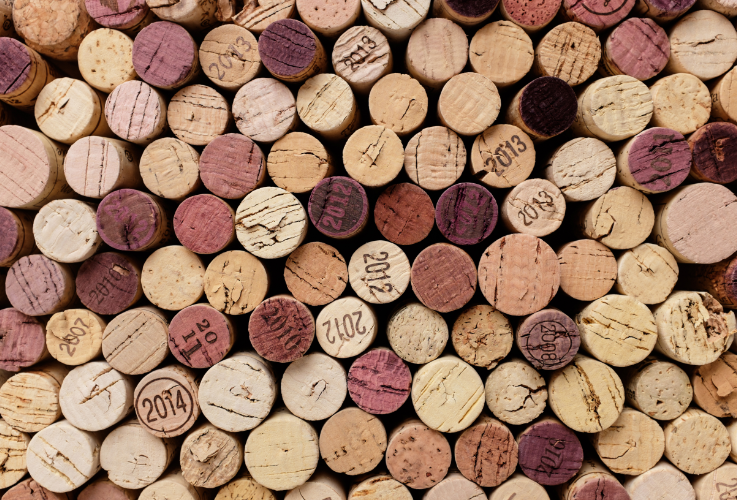
Color seemed to be everywhere. Paintings covered the walls. Sculptures occupied tables and corners. Bowls, prints, carvings, and other pieces appeared wherever my eyes landed. And woven among all that art were bottles of wine—rows and rows of them, their labels and shapes sometimes so distinctive that the bottles themselves seemed like part of the gallery.
A young woman was busy at the register when I entered. I didn’t know her name yet. She looked up and gave me a warm smile, the kind that manages to say welcome without requiring anything in return.
I did what I suspect many people do when entering an unfamiliar place. I turned right.
There was a wine bar, and nearby, a beautiful dining table and chairs. I continued wandering and discovered more wine than I had expected to find in an art gallery. Then came a small collection of food: crackers, cheeses, dips, and spreads. There were corkscrews and wine openers, glasses and napkins, cheese slicers and cutting boards.
The gallery staff beautifully arranged the entire gallery; even the food and corkscrews looked like art.
I kept wandering.
That may be one of the pleasures of a good gallery. No one tells you where to begin. You follow whatever catches your eye.
For me, one of those things was Paul van Heest’s work. I stopped and studied it, trying to make meaning of what I was seeing. Elsewhere were the Lake Michigan shoreline scenes one might expect to encounter in western Michigan, but there were also animals, abstracts, impressionist works, sculptures, and pieces that required me to stand still for a while.
Eventually, I circled back toward the young woman at the register.
This time she introduced herself.
McKenzie.
I asked whether the wine bar was open.
“Of course,” she said enthusiastically.
Could I purchase a glass of wine?
Absolutely. And, she told me, I was welcome to take it with me while I wandered through the gallery.
That sounded like an excellent arrangement.
We walked over to the bar, where I decided I wanted a white wine. McKenzie suggested a Viognier.
It was splendid.
Glass in hand, I set off again.
Something changes when you wander through an art gallery with a glass of wine. Perhaps you slow down. Perhaps you permit yourself to linger. I found myself moving from painting to painting, sometimes studying the work and sometimes simply enjoying the color and form around me.
Later, I returned to McKenzie with another question.
I wanted to take some Michigan wine home.
She explained that the gallery carried quality wines from around the world, so their Michigan selection was relatively small. There was no attempt to turn my request into something it wasn’t. She showed me what they had and began telling me about the wines.
I eventually chose six bottles.
As she described them, I found myself thinking:
How can you know the details of all these wines?
There were so many bottles in that gallery. Different grapes. Different regions. Different characteristics. Yet McKenzie spoke about them comfortably and specifically, just as she had when recommending my glass of Viognier.
What impressed me, though, wasn’t simply what she knew.
It was what she did with what she knew.
There was no performance to it. No sense that I was being given a lesson I hadn’t requested. No suggestion that she was the expert and I was the novice. She answered my questions, offered suggestions, and then allowed me to continue exploring.
Knowledge can sometimes create distance between people.
We have all encountered the person who knows a great deal and makes certain that we know they possess a vast amount of knowledge. Expertise can become its own kind of barrier. It can make us reluctant to ask the next question because we don’t want to reveal how little we know.
But knowledge can do something else.
It can invite us in.
That was what McKenzie did.
She knew the wine, but she didn’t make wine intimidating. She knew the gallery, but she didn’t make art intimidating. She was available without hovering, knowledgeable without being haughty, friendly without seeming artificial, and helpful without becoming pushy.
Those combinations are rarer than they sound.
There must have been considerable preparation behind what I experienced that afternoon. No one becomes knowledgeable about wine or art simply by standing near it. Whatever combination of study, training, experience, curiosity, and practice had brought McKenzie to that gallery, the result appeared effortless.
That is one mark of genuine professionalism.
We notice the ease without seeing all the work that made the ease possible.
Eventually, it was time for me to leave. McKenzie rang up my purchases. We exchanged pleasant goodbyes, and I headed down the road to Borrowed Time, where a marvelous dinner awaited me.
My Michigan trip continued.
There would be other restaurants, other conversations, other places to explore. I would eventually drive home with six bottles of Michigan wine among the reminders of where I had been.
But something else came home with me.
I remembered McKenzie.
Not because she had done anything dramatic. Not because she had tried to make herself memorable. Perhaps almost the opposite.
She had helped me enjoy something she knew well without ever making the experience about her.
There is a quiet generosity in that kind of expertise.
The people who know the most don’t always need to show us how much they know.
Sometimes they pour the Viognier, answer our questions, and send us back into the gallery to discover something for ourselves
Some people become memorable without ever trying to be.