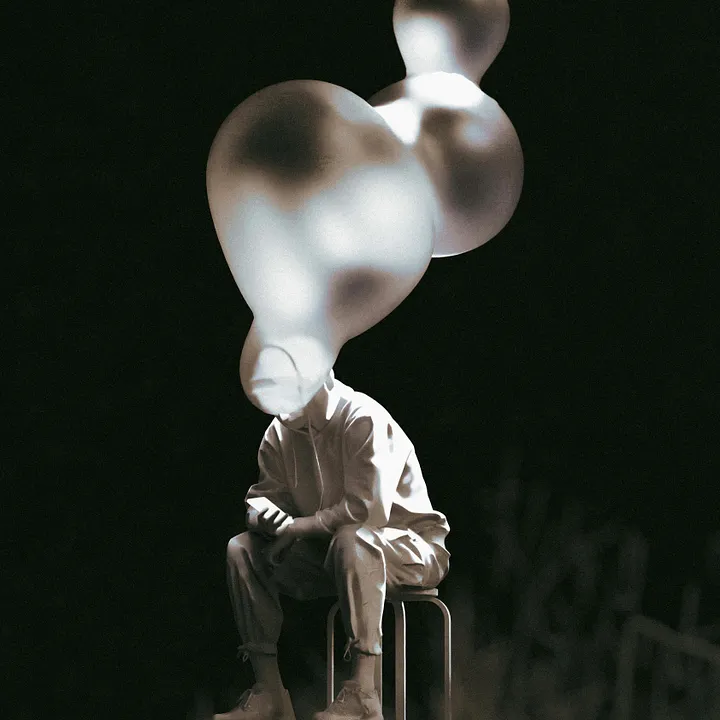
I was reading Agatha Christie’s “The Disappearance of Mr. Davenheim” when Hercule Poirot stopped me. Not literally, of course. But I reached a passage and stopped reading.
“It is the brain, the little grey cells… on which one must rely. The senses mislead. One must seek the truth within—not without.”
I read it again. The little grey cells. I closed—or perhaps lowered—the book and sat with that phrase for a moment.
Poirot was talking about solving a mystery.
I was thinking about hippocampal brain slices.
Years ago, during my biomedical sales days, I spent a great deal of time in research laboratories. They were fascinating places. Patch clamps. Oscilloscopes. Ion channels. Living cells revealing tiny electrical events most of us would never imagine were happening.
I wasn’t the scientist conducting those experiments. I was a pharmacist who had wandered into their world through biomedical sales, and I was endlessly curious about what they were doing. One day, that curiosity gave me a glimpse of something I already knew. Or thought I knew.
I was visiting a researcher who was studying cardiomyocytes—living heart muscle cells. His work involved measuring the electrical activity that allows those cells to do what heart cells have been doing faithfully since before any of us took our first breath. He knew I was a pharmacist.
“Brad, do you want to see diltiazem work?”
Of course I did.
Diltiazem is a calcium-channel blocker, a medication used for conditions such as high blood pressure and certain heart rhythm problems. I knew its pharmacology. I knew what blocking calcium channels did to cardiac cells. I had learned it in school, talked about it with physicians, and explained it to patients.
The researcher added diltiazem to the cardiomyocytes, and I watched the oscilloscope. The electrical activity changed.
There it was. Not a diagram in a pharmacology textbook. Not an explanation of a mechanism of action. Not something I had memorized for an examination years before. I was watching a drug affect a living heart cell.
I knew what diltiazem did. But now I had seen it. There is a difference.
I think that is why Poirot’s little grey cells stopped me all these years later. We spend much of our lives collecting information. We read books. We attend classes. We listen to experts. We learn our professions. Eventually, some things become so familiar that we stop wondering about them.
But every so often, something interrupts us. A researcher asks a question. An oscilloscope flickers. A sentence in an old mystery story makes us put the book down. And suddenly something we thought we understood asks to be looked at again.
Perhaps that is what observation really is. Not merely seeing what is in front of us, but being curious enough to stop when something catches our attention—and then wondering why.
Poirot solved mysteries that way. Scientists make discoveries that way. Writers sometimes find essays that way.
The clues were there all along.