When I think back to ninth grade, I don’t remember many of the science lessons.
I remember Mr. Dotson.
He wasn’t the loudest teacher in the building. He didn’t pace the room delivering dramatic speeches or try to become everyone’s favorite. He had a way of noticing students.
Looking back now, I realize that may have been his greatest gift.
It happened during class. I don’t remember exactly what we were doing. Perhaps I was handing in a test or an assignment. Somehow, Mr. Dotson asked me a question about my abilities.
At the time, my older brother Neal seemed to have all the talent.
He was athletic. Confident. Naturally gifted. Teachers admired him. Coaches admired him. I admired him too.
Compared with Neal, I felt ordinary.
So I answered honestly.
“Neal has all the talent,” I said. “I don’t have any.”
A few students nearby smirked.
I can still feel the embarrassment of that moment — the awareness that I had said something vulnerable in a room full of teenagers, where vulnerability is rarely allowed to pass unnoticed.
Mr. Dotson did not smirk.
He looked at me for a moment, almost as if he couldn’t believe what he had heard.
Then he said, “Oh, Brad, you have talents too. I see some. You just haven’t discovered them yet.”
I was dumbstruck.
Me?
At fourteen, I was struggling with terrible acne, the kind that makes you want to avoid mirrors and hope no one looks too closely. My self-image was poor, and my self-esteem was not much healthier than my complexion.
I did not feel like someone with undiscovered talents.
My first reaction was disbelief.
Then sarcasm.
What does Mr. Dotson know?
He doesn’t know me.
I did not suddenly become confident. I did not walk out of the classroom transformed. No music swelled in the background. No future opened clearly before me.
But his words stayed.
They settled slowly, almost against my will.
Maybe he did see something.
Maybe there was something in me I could not yet see.
And for the first time in a long while, there was hope.
Years earlier, in fifth grade, another teacher had recognized something in me. Mr. Ellingson had encouraged my creativity and my writing. But encouragement does not become permanent simply because someone offers it once.
Children grow. Adolescence arrives. Confidence gets buried beneath comparison, embarrassment, rejection, and the strange belief that everyone else has already figured out who they are.
Sometimes we need to be seen again.
That was what Mr. Dotson did.
He did not tell me what my talents were. He did not predict that I would become a pharmacist, a teacher, a writer, or someone who would spend much of his life helping other people understand complicated things.
He refused to accept the story I was telling about myself.
That may be one of the most important things a teacher can do.
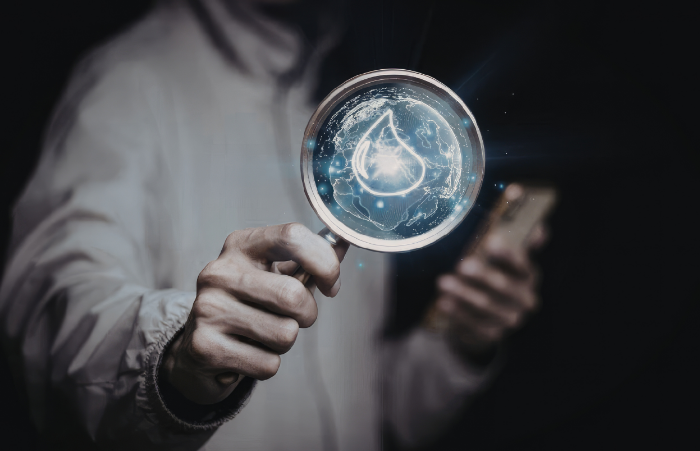
Years later, I would stand beside patients at pharmacy counters and explain what a medication was supposed to do. I would teach students and laboratory professionals how to use microscopes. I would help people see neurons, cells, and structures that had been present all along but invisible without the right lens.
Eventually, I began to write.
Not because I had always believed I could, but because somewhere along the way, enough people had held open that possibility until I could believe it for myself.
Mr. Dotson was one of them.
I doubt he remembered that classroom exchange for long. Teachers say thousands of things over the course of a career. Most disappear as soon as the bell rings.
But students sometimes carry a sentence for the rest of their lives.
That is the strange and beautiful power of encouragement. The person offering it may think they are merely responding to a moment. The person receiving it may be searching for evidence that a different life is possible.
Mr. Dotson did not illuminate the entire road ahead.
He left on one small light.
And perhaps that is how many of us find our way.
Someone notices us when we are uncertain.
Someone contradicts the harshest thing we believe about ourselves.
Someone says, “You haven’t discovered it yet.”
Then, years later, we realize the light was never meant to show us everything.
It was only meant to help us take the next step.