There is something my father used to say to me. Whenever an idea captured my attention, he’d smile, shake his head, and say, “Brad, when you get something on your mind, you never let it go.”
Years later, Jane has said much the same thing. So has my son, Drew. A few friends have been even less diplomatic.
“Geez, Brad,” they’ve laughed, “drop it, will you?”
The truth is, I’ve never been very good at letting go.
For most of my life, I assumed they were describing my personality. I was the person who stayed with an idea longer than most people did. If something interested me, I wanted to understand it. If a question remained unanswered, I kept turning it over in my mind until it finally made sense.
Only recently have I begun to wonder if they were describing something else entirely.
People occasionally ask me where the ideas for Observations come from. It’s a fair question. After all, every Wednesday another essay appears. Sometimes it’s about pharmacy. Sometimes it’s about Michigan, a conversation with a stranger, or a quiet moment that unexpectedly stayed with me. From the outside, I keep a notebook filled with topics, ready to choose one each week.
I don’t.
In fact, I rarely go looking for ideas at all.
Most weeks are filled with moments worth remembering: a thoughtful lunch with a friend, a sentence in a book that makes me stop and read it again, a walk, a patient, a chance remark that disappears almost as quickly as it was spoken.
Most of those moments quietly become part of the background of life.
But now and then, one doesn’t.
It stays with me. It follows me home. It interrupts my thoughts while I’m exercising, returns while I’m making dinner, and quietly joins me on a morning walk.
And after a while, I find myself asking a different question.
Not, What should I write this week?
But…
Why won’t this leave me?
I used to think the answer was persistence. Maybe even stubbornness. After all, there was plenty of evidence. My father had noticed it. Jane noticed it. Drew noticed it. Friends certainly noticed it.
But persistence doesn’t quite explain what happens when an idea stays with me. I’m not always trying to solve it. Sometimes I’m barely thinking about it at all.
Then it returns.
A conversation I thought was over resurfaces while I’m walking. A sentence I read in the morning comes back while I’m making dinner. Something I noticed days earlier suddenly connects with something else.
And gradually, I begin to understand that the idea hasn’t been waiting for me to do something with it. It has been waiting for me to understand why it mattered.
That realization has changed the way I think about writing.
Writing doesn’t begin when I sit at my keyboard. It begins when something quietly refuses to leave me.
The keyboard comes later. By then, the essay has often been underway for days.
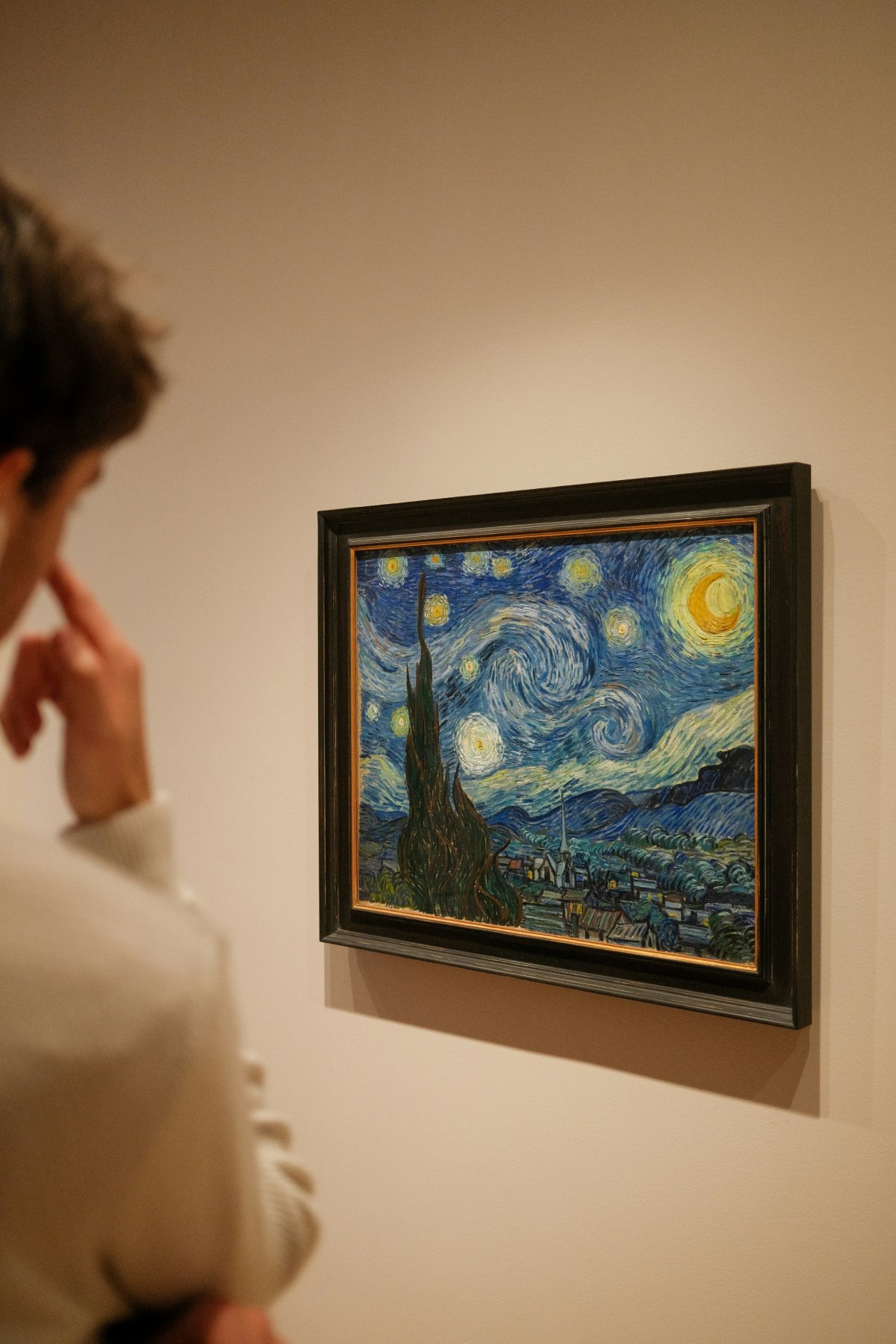
A few weeks ago, I spent an afternoon wandering through galleries in southwest Michigan. One stop, in particular, stayed with me.
At first, I assumed it was because of the art. Or perhaps because I enjoyed a glass of Viognier while browsing the gallery. But after I returned home, I realized neither of those things explained why I kept thinking about the visit.
What stayed with me was McKenzie.
She welcomed visitors with the rare combination of warmth and knowledge. She knew the paintings. She knew the local wineries. She knew the stories behind both. Before long, I wasn’t simply looking at art or tasting wine. I was seeing southwest Michigan through the eyes of someone who genuinely loved the place she called home.
I didn’t write about McKenzie that afternoon. Or the next day.
But she quietly accompanied me home.
Several days passed before I understood why. It wasn’t really about wine. It wasn’t really about art.
It was about the quiet generosity of someone who loved something enough to help someone else see it more clearly.
That’s when I realized something.
The essays in Observations don’t begin on Wednesday morning. They begin much earlier, when an ordinary moment quietly asks for a little more of my attention.
That’s why I don’t think of Observations as simply a weekly newsletter anymore.
It has become my public notebook of noticing.
Not a diary. A diary records what happened.
Not a memoir. A memoir explores how life changes us.
A notebook of noticing quietly asks a different question:
What am I being invited to understand?
Perhaps you’ve had moments that refused to leave as well: a conversation that lingered long after it ended, a sentence you couldn’t stop thinking about, a person whose kindness stayed with you, a question that quietly followed you for days.
It’s easy to dismiss those moments and move on. Life gives us plenty of reasons to hurry toward the next obligation, the next appointment, the next notification.
But I’ve begun to wonder if those moments aren’t interruptions at all.
Perhaps they’re invitations.
Not every passing thought deserves our attention. But every so often, one quietly asks us to slow down, to look again, to understand a little more deeply than we did the first time.
I’ve come to believe that those are the moments worth trusting. They’ve given me essays. More importantly, they’ve given me a richer way of moving through the world.
So if someone were to ask where the ideas for Observations come from, I could tell them they begin with a notebook, a keyboard, or a Wednesday morning.
But that wouldn’t be true.
They begin much earlier than that.
They begin the moment something quietly refuses to leave.
And when it does, I’ve learned not to chase it or force it into words. I’ve learned to walk with it.
Because sooner or later, if I’m patient enough to keep paying attention, it usually reveals what it came to teach me.
Perhaps it will do the same for you.